“The paternoster elevator at Prague City Hall. These door-less, continuously moving lifts are the 1860s invention of Peter Ellis, an architect from Liverpool, and were once popular all over Eastern Europe and Germany before production ended in the 1970s over safety concerns. ” Video courtesy Jada Yuan
you ever just instantly develop an irrational fear
my toddler brain immediately thought “in what brutal manner will you be crushed if you don’t get out at the last floor” but it turns out thats not one of the ways they will kill you
I’m assuming this is called a “paternoster” because you gotta pray the entire time you’re on it.
It had a way greater nickname in German: “Proletenbagger” (”pleb digger”) and, because naturally the rich needed their own, better paternosters, “Bonzenbagger” (”nob digger”). Class commentary by way of technology.
Today I walk into work and there are a ton of people in my building and it’s kind of a mess and everyone is talking and I sort of just blurt out:
“Man, it’s a zoo in here!”
Everyone stopped and looked at me as though I had 2 heads.
Then I realized.
I work at a zoo.
Update: my boss was talking about how he was really excited for an entire week of vacation and was wondering what he should do, so I looked him dead in the eye and told him, with a straight face,
“You should visit the local Zoo, I heard it’s really nice.”
Under pain of death I am no longer allowed to make any zoo related jokes.
Part three: I was cleaning the squirrel monkeys and one of them kept trying to climb up me so I sort of just yelled
“WILL YOU STOP MONKEYING AROUND??”
I forgot my boss was in the next room and he walked and just glared at me
Another update:
I was in the reptile house and one of the new interns looked like they needed some help grabbing a snake so I just blurted out:
“Let me slither on over there and help”
They actually appreciated the pun XD
So I’m in the kangaroo yard and my boss says “they need more water, hop to it.” And I kind of look at him not sure if he said that on purpose but he looks back with such horror and just whispers “I hope you’re happy” and walks away.
2. you know, we have fun here, with the word “meme,” but according to meme theory, which is an actual thing pioneered by reptilian human impersonator Richard Dawkins in his 1976 book The Selfish Gene, most of what we call memes are very unsuccessful memes. A meme, in the scientific sense – if one is generously disposed to consider memetics a science on any particular day – is an idea that acts like a gene. That is, it seeks to replicate itself, as many times as possible, and as faithfully as possible.
That second part is important. A gene which is not faithful in its replication mutates, sometimes rapidly, sometimes wildly. The result might be cancer or a virus or (very very very rarely) a viable evolutionary step forward, but whatever the case, it is no longer the original gene. That gene no longer exists. It could not successfully reproduce itself.
The memes we pass around on the internet are, in general, very short lived and rapidly mutating. It’s rare for any meme to survive for more than a year: in almost all cases, they appear, spread rapidly, spawn a thousand short-lived variations, and then are swiftly forgotten. They’re not funny anymore, or interesting anymore. They no longer serve any function, and so they’re left behind, a mental evolutionary dead end.
This rendition of Freddie Mercury’s immortal opera Bohemian Rhapsody is about the most goddamned amazing demonstration of a successful meme I’ve ever seen. This song is 42 years old, as of 2017. FORTY TWO YEARS OLD. And it has spread SO far, and replicated itself across the minds of millions of people SO faithfully, that a gathering of 65,000 more or less random people, with nothing in common except that they all really like it when Billie Joe Armstrong does the thing with the guitar, can reproduce it perfectly. IN PERFECT TIME. THEY KNOW THE EXACT LENGTH OF EVERY BRIDGE. THEY EVEN GET THE NONSENSE WORDS RIGHT. THEY DIVIDE THEMSELVES UP IN ORDER TO SING THE COUNTER-CHORUS.
“Yeah, Pyrrhic, lots of people know this song.”
Listen, you glassy-eyed ninny: our species’ ability to coherently pass along not just genetic information, but memetic information as well, is the reason we’re the dominant species on this planet. Language is a meme. Civilization is a collection of memes. Lots of animals can learn, but we may be the only animal that latches onto ephemera – information that doesn’t reflect any concrete reality, information with little to no immediate practical application – and then joyfully, willfully, unrelentingly repeats it and teaches it to others. Look at how wild this crowd is, because they’re singing the same song! It doesn’t DO anything. It’s not even why they showed up here today! If you sent out a letter to those same 65,000 people that said, “Please show up in this field on this day in order to sing Bohemian Rhapsody,” very few of them would have showed up. But I would be surprised to meet a single person in that crowd who joined in the singing who doesn’t remember this moment as the most amazing part of a concert they paid hundreds of dollars to see.
And they’re just sharing an idea. It’s stunning and ridiculous. Something about how our brains work make us go, “Hey!! Hey everybody!! I found this idea! It’s good! I like it! I’m going to repeat it! Do you know it too?? Repeat it with me! Let’s get EVERYBODY to know it and repeat it and then we can all have it together at the same time! It’s a good idea! I’m so excited to repeat it exactly the way I heard it, as loudly as I can, as often as possible!!”
This is how culture happens! This is how countries happen! Sometimes a persistent, infectious idea – a meme – can be dangerous or dark. But our human delight at clutching up good memes like magpies and flapping back to our flock to yell about them to everyone we know is why we as a species bothered to start doing things like “telling stories” and “writing stuff down.”
“That’s a lot of spilled ink for a Queen song, Pyrrhic.”
Man I just fucking love people.
reblogging for the excellent A+ meta and the fact that they were singing the goddamn guitar parts and that’s fantastic
After traveling for two years and billions of kilometers from Earth, the OSIRIS-REx probe is only a few months away from its destination: the intriguing asteroid Bennu. When it arrives in December, OSIRIS-REx will embark on a nearly two-year investigation of this clump of rock, mapping its terrain and finding a safe and fruitful site from which to collect a sample.
The spacecraft will briefly touch Bennu’s surface around July 2020 to collect at least 60 grams (equal to about 30 sugar packets) of dirt and rocks. It might collect as much as 2,000 grams, which would be the largest sample by far gathered from a space object since the Apollo Moon landings. The spacecraft will then pack the sample into a capsule and travel back to Earth, dropping the capsule into Utah’s west desert in 2023, where scientists will be waiting to collect it.
This years-long quest for knowledge thrusts Bennu into the center of one of the most ambitious space missions ever attempted. But the humble rock is but one of about 780,000 known asteroids in our solar system. So why did scientists pick Bennu for this momentous investigation? Here are 10 reasons:
1. It’s close to Earth
Unlike most other asteroids that circle the Sun in the asteroid belt between Mars and Jupiter, Bennu’s orbit is close in proximity to Earth’s, even crossing it. The asteroid makes its closest approach to Earth every 6 years. It also circles the Sun nearly in the same plane as Earth, which made it somewhat easier to achieve the high-energy task of launching the spacecraft out of Earth’s plane and into Bennu’s. Still, the launch required considerable power, so OSIRIS-REx used Earth’s gravity to boost itself into Bennu’s orbital plane when it passed our planet in September 2017.
2.It’s the right size
Asteroids spin on their axes just like Earth does. Small ones, with diameters of 200 meters or less, often spin very fast, up to a few revolutions per minute. This rapid spinning makes it difficult for a spacecraft to match an asteroid’s velocity in order to touch down and collect samples. Even worse, the quick spinning has flung loose rocks and soil, material known as “regolith” — the stuff OSIRIS-REx is looking to collect — off the surfaces of small asteroids. Bennu’s size, in contrast, makes it approachable and rich in regolith. It has a diameter of 492 meters, which is a bit larger than the height of the Empire State Building in New York City, and rotating once every 4.3 hours.
3. It’s really old
Bennu is a leftover fragment from the tumultuous formation of the solar system. Some of the mineral fragments inside Bennu could be older than the solar system. These microscopic grains of dust could be the same ones that spewed from dying stars and eventually coalesced to make the Sun and its planets nearly 4.6 billion years ago. But pieces of asteroids, called meteorites, have been falling to Earth’s surface since the planet formed. So why don’t scientists just study those old space rocks? Because astronomers can’t tell (with very few exceptions) what kind of objects these meteorites came from, which is important context. Furthermore, these stones, that survive the violent, fiery decent to our planet’s surface, get contaminated when they land in the dirt, sand, or snow. Some even get hammered by the elements, like rain and snow, for hundreds or thousands of years. Such events change the chemistry of meteorites, obscuring their ancient records.
4.It’s well preserved
Bennu, on the other hand, is a time capsule from the early solar system, having been preserved in the vacuum of space. Although scientists think it broke off a larger asteroid in the asteroid belt in a catastrophic collision between about 1 and 2 billion years ago, and hurtled through space until it got locked into an orbit near Earth’s, they don’t expect that these events significantly altered it.
5. It might contain clues to the origin of life
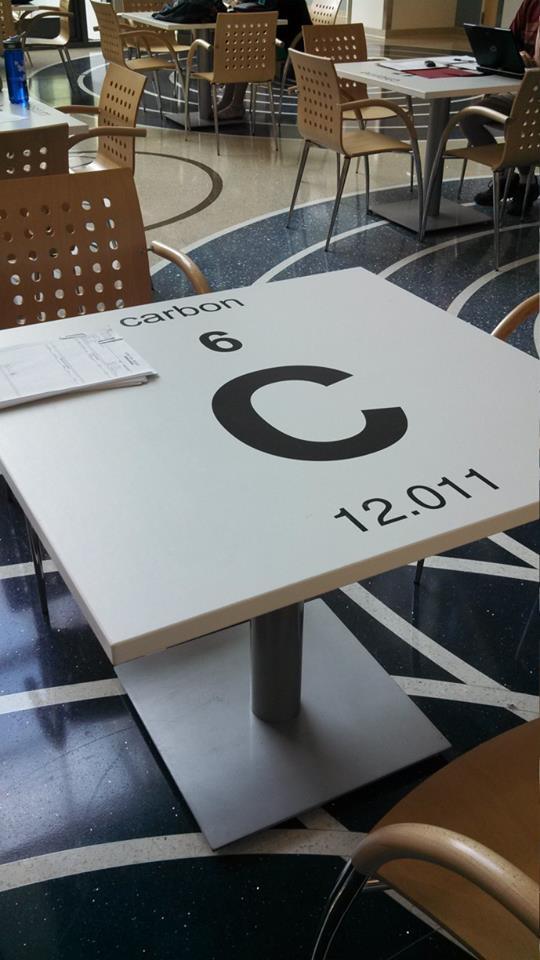
Analyzing a sample from Bennu will help planetary scientists better understand the role asteroids may have played in delivering life-forming compounds to Earth. We know from having studied Bennu through Earth- and space-based telescopes that it is a carbonaceous, or carbon-rich, asteroid. Carbon is the hinge upon which organic molecules hang. Bennu is likely rich in organic molecules, which are made of chains of carbon bonded with atoms of oxygen, hydrogen, and other elements in a chemical recipe that makes all known living things. Besides carbon, Bennu also might have another component important to life: water, which is trapped in the minerals that make up the asteroid.
6. It contains valuable materials
Besides teaching us about our cosmic past, exploring Bennu close-up will help humans plan for the future. Asteroids are rich in natural resources, such as iron and aluminum, and precious metals, such as platinum. For this reason, some companies, and even countries, are building technologies that will one day allow us to extract those materials. More importantly, asteroids like Bennu are key to future, deep-space travel. If humans can learn how to extract the abundant hydrogen and oxygen from the water locked up in an asteroid’s minerals, they could make rocket fuel. Thus, asteroids could one day serve as fuel stations for robotic or human missions to Mars and beyond. Learning how to maneuver around an object like Bennu, and about its chemical and physical properties, will help future prospectors.
7. It will help us better understand other asteroids
Astronomers have studied Bennu from Earth since it was discovered in 1999. As a result, they think they know a lot about the asteroid’s physical and chemical properties. Their knowledge is based not only on looking at the asteroid, but also studying meteorites found on Earth, and filling in gaps in observable knowledge with predictions derived from theoretical models. Thanks to the detailed information that will be gleaned from OSIRIS-REx, scientists now will be able to check whether their predictions about Bennu are correct. This work will help verify or refine telescopic observations and models that attempt to reveal the nature of other asteroids in our solar system.
8. It will help us better understand a quirky solar force …
Astronomers have calculated that Bennu’s orbit has drifted about 280 meters (0.18 miles) per year toward the Sun since it was discovered. This could be because of a phenomenon called the Yarkovsky effect, a process whereby sunlight warms one side of a small, dark asteroid and then radiates as heat off the asteroid as it rotates. The heat energy thrusts an asteroid either away from the Sun, if it has a prograde spin like Earth, which means it spins in the same direction as its orbit, or toward the Sun in the case of Bennu, which spins in the opposite direction of its orbit. OSIRIS-REx will measure the Yarkovsky effect from close-up to help scientists predict the movement of Bennu and other asteroids. Already, measurements of how this force impacted Bennu over time have revealed that it likely pushed it to our corner of the solar system from the asteroid belt.
9. … and to keep asteroids at bay
One reason scientists are eager to predict the directions asteroids are drifting is to know when they’re coming too-close-for-comfort to Earth. By taking the Yarkovsky effect into account, they’ve estimated that Bennu could pass closer to Earth than the Moon is in 2135, and possibly even closer between 2175 and 2195. Although Bennu is unlikely to hit Earth at that time, our descendants can use the data from OSIRIS-REx to determine how best to deflect any threatening asteroids that are found, perhaps even by using the Yarkovsky effect to their advantage.
10. It’s a gift that will keep on giving
Samples of Bennu will return to Earth on September 24, 2023. OSIRIS-REx scientists will study a quarter of the regolith. The rest will be made available to scientists around the globe, and also saved for those not yet born, using techniques not yet invented, to answer questions not yet asked.
Read the web version of this week’s “Solar System: 10 Things to Know” article HERE.
Make sure to follow us on Tumblr for your regular dose of space: http://nasa.tumblr.com.

























 The Perfect Scientist