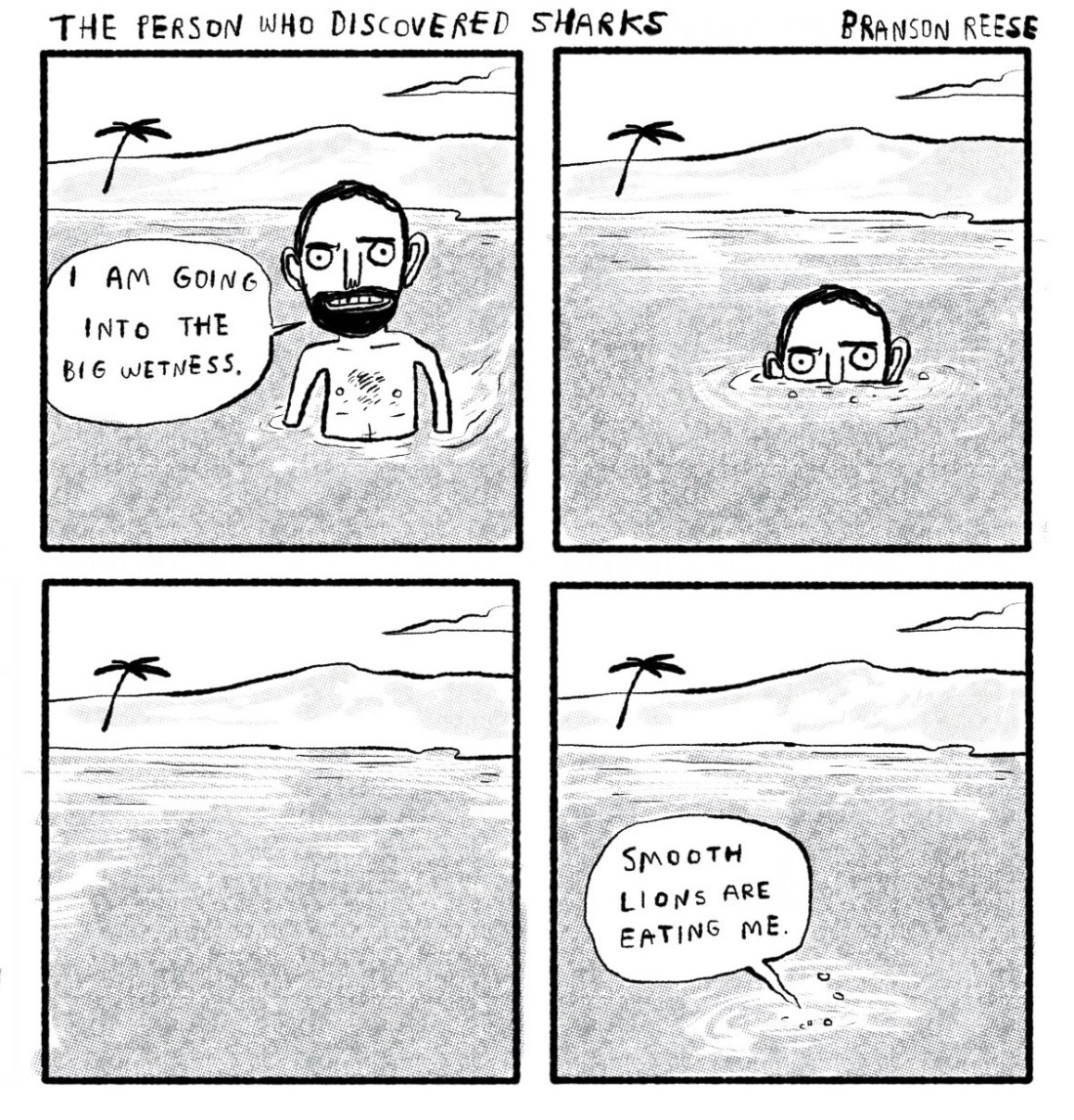
the twitter thread the artist created after this was one of the best situations i have ever seen in my whole life:
Somebody give this ignoramus a piece of actual shark skin and tell him to rub his face with it, let him find out just how “smooth” sharks really are.
Somebody did. I use it as a pillowcase because it’s so smooth.
But buddy.
Shark skin feels exactly like sandpaper. It is made up of tiny teeth-like structures called placoid scales, also known as dermal denticles. These scales point towards the tail and help to reduce friction from surrounding water when the shark swims. … In the opposite direction, it feels very rough like sandpaper.
The substance the teacher uses in the video is liquid methane. But methane has a really low boiling point. Like, about −160 °C low. So once it touches the comparatively hot floor, the Leidenfrost effect comes into play, and it slides across the floor. The issue is though, methane is colorless, so you can’t normally see it. Thankfully (in this demonstration), methane is also very flammable, so he sets it on fire before dumping it onto the floor so you can see it as it moves.
Definitely a cooler demonstration of the Leidenfrost effect than dropping a little water in a hot pan.
















 The Perfect Scientist