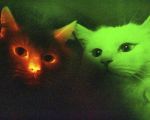
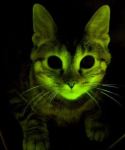
Scientists have discovered how to make glow-in-the-dark cats by
inserting the jellyfish genes that create fluorescent proteins into feline eggs.
I needed to check that this was real, and apparently, it is. What’s more, the end goal in these experiments was to fight feline AIDS, creating glow-in-the-dark cats was a side effect. That might be the greatest sentence I write this year.
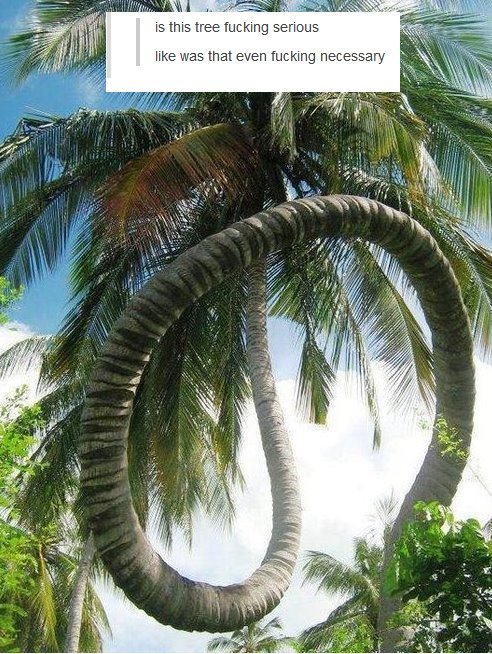
Actually that’s the language side—Japanese language, to be exact. We’re still waiting to hear from the science side of Tumblr as to how and why a tree would grow in this manner.
Trees grow in the direction of light, so clearly this tree had light in a strange loopy pattern during growth.
Plant follow light, light make loopy loop, plant go loopy loop.
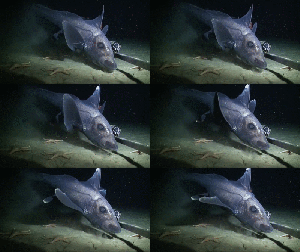
Dark ghost shark (Hydrolagus novaezealandiae) and the pale ghost shark (Hydrolagus bemisi), both are shortnose chimaera of the family Chimaeridae, found on the continental shelf around the South Island of New Zealand in depths from 30 to 850 m.
Both ghost shark species are taken almost exclusively as a bycatch of other target trawl fisheries
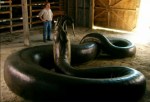
The Titanoboa, is a 48ft long snake dating from around 60-58million years ago. It had a rib cage 2ft wide, allowing it to eat whole crocodiles, and surrounding the ribcage were muscles so powerful that it could crush a rhino. Titanoboa was so big it couldn’t even spend long amounts of time on land, because the force of gravity acting on it would cause it to suffocate under its own weight.
I’m so glad they aren’t around
omg me too. I’m scared enough of 26 ft long anacondas. I’m so happy Megalodons, those giant sharks, aren’t alive either
Praise natural selection
I remember watching Walking with Beasts or something similar, or some British tv show about evolution
The subject was something like a 12 foot long water scorpion
I was so startled by its sudden appearance and narration that I yelped: “12 fucking feet?!?! I’m fucking glad it’s extinct!”
Dude, prehistory was home to some fucking TERRIFYING creatures. For some reason, everything back then was enormous and scary. Extinction doesn’t always have to be a bad thing!
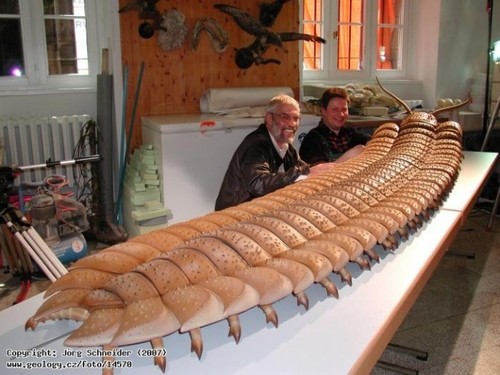
And Poppy, what you saw was an arthropod known as Pterygotus (it was actually featured in Walking With Monsters). Not only was it as big (or maybe even bigger) than your average human, it had a stinger the size of a lightbulb. REALLY glad that bugger isn’t around anymore.
Also, Megalodon deserves to be mention again, because just hearing its name makes me want to never be submerged in water ever again.
GOD, I HATE THIS POST. HOW DO WE EVEN KNOW THAT SHIT ISN’T STILL AROUND? LURKING? EVOLVING? WE DON’T. WE DON’T KNOW SHIT ABOUT SHIT DOWN THERE. THE OCEAN IS A PRIMEVAL HELLSCAPE NIGHTMARE AND WE ALL JUST DIP OUR STUPID FRAGILE UNPROTECTED FETUS BODIES AROUND THE EDGES OF IT LIKE THAT’S NORMAL. FUCK THE OCEAN.
this is so relevant to my interests
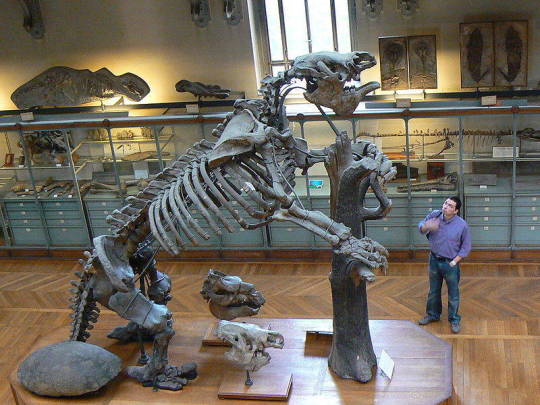
It wasn’t just the predators. North Carolina was once home to giant ground sloths…
THAT IS A GODDAMNED LEAF-EATING SLOTH.
We’ve got a skeleton of one of these fuckers at the museum downtown, and man, just being NEAR it is unsettling.
DON’T FORGET PREHISTORIC WHALES, SOME OF THOSE FUCKERS WERE TERRIFYING
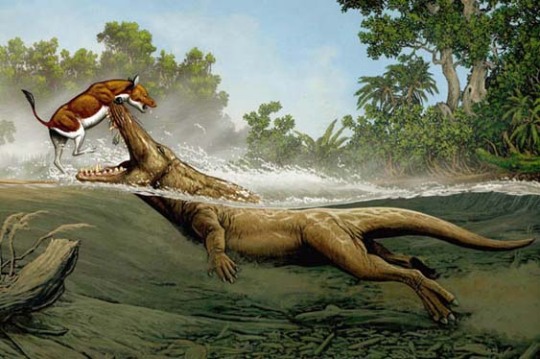
AMBULOCETUS WAS AMPHIBIOUS AND PRETTY BADASS
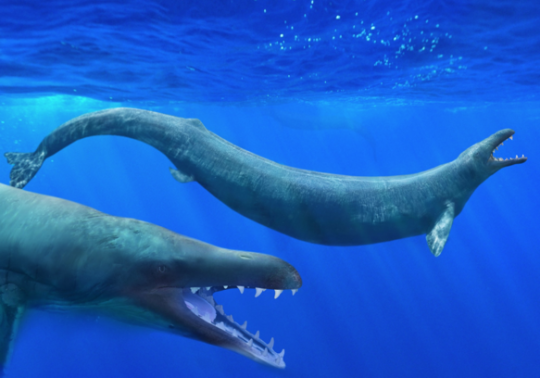
BASILOSAURUS WAS THIS GIANT REPTILIAN CETACEAN THAT PROBABLY SWAM LIKE A DUMB EEL BECAUSE OF ITS TINY FLUKES BUT THIS FUCKER WAS 60 FEET LONG AND AT THE TOP OF THE MARINE FOOD CHAIN
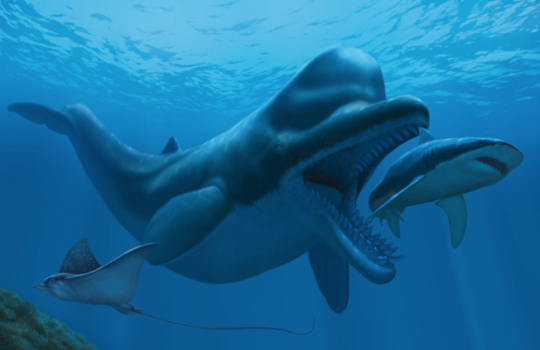
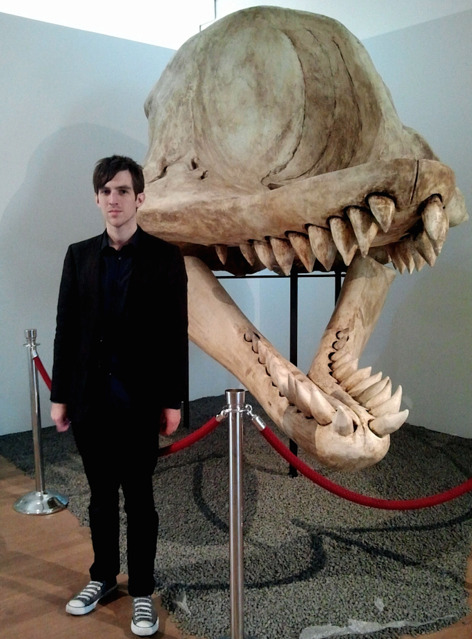
AND THEN THERE’S MY FAVORITE, ZYGOPHYSETER, WHICH WAS THIS HUGE EARLY SPERM WHALE THAT ATE SHARKS AND OTHER WHALES
IT WAS NOTHING BUT TEETH
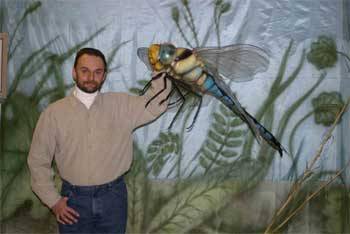
The reason why the animals in the prehistoric times were so big was because there was much more oxygen in the atmosphere if I recall correctly. Because there was so much oxygen and so few carbon gasses, life on earth was able to grow to terrifying lengths and heights, don’t forget how giant the bugs were.
I have never seen so much prime nope in a single post
Also important to note that megalodon is theorized to still be alive,possibly living in the darkest depths of the ocean. They haven’t found signs of its extinction
scientists: “we haven’t seen a megalodon in quite some time now, let’s just hope it’s exstinct”
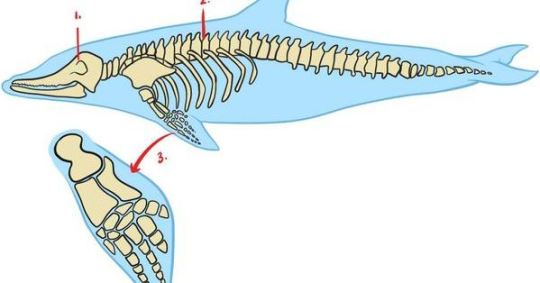
Honestly, icthyosaur fins are incredibly unsettling. What do I mean by that? Well, let’s look at the fin of a dolphin and compare.
It has a hand in there. Good. Homologous structures and all that. This is a good creature.
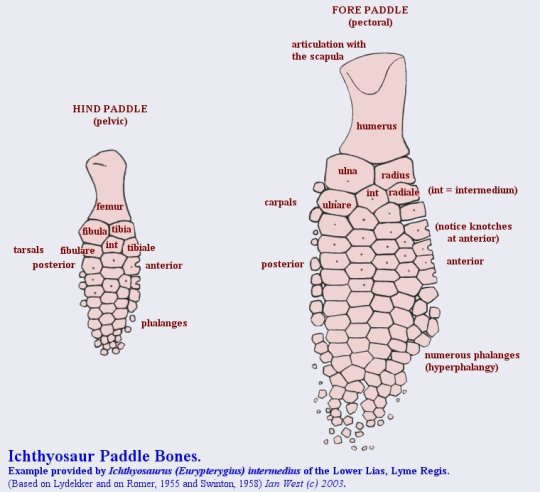
Now what the hell is this ungodly thing?
The entire fin, it’s just full of bones. A solid bone paddle. What is going on here?
Well, some Icthyosaurs actually exhibit a phenomenon known as polydactyly. What this means is that they had extra fingers. While not entirely uncommon for a single individual of a species to have extra digits, it’s extremely uncommon among tetrapods to gain extras across an entire species. We see it among some early tetrapods, but we also see it here, with Icthyosaurs. In some species, the number of fingers on one limb reaches ten.
Icthyosaurs also exhibit something known as hyperphalangy. While less unique (it’s also present in whales, mosasaurs and plesiosaurs according to Wikipedia), hyperphalangy means that the limbs have extra phalanx bones. What this means in Icthyosaurs is an almost corncob-like grid of bones.
In fact, when I was researching this, google thought that a picture of icthyosaur fins was in fact of corn domestication.
In conclusion, Icthyosaurs have clearly commited some sin in finger theivery, and their extinction was deserved.
I’m just trying to figure out why Secret Fingers Hidden in the Flesh freak you out less than flipperbones being shaped like flippers
It’s because finger fins are the norm! You see them in whales, manatees, turtles, mosasaurs, seals, nothosaurs, and pretty much every other aquatic tetrapod! Seeing homologous structures similarly appear in convergently evolved species is what you expect. Seeing corn-filled fins is not!
TIL a cave goat that went extinct approx. 5,000 years ago is the first known mammal to have become cold-blooded. Their bone growth rate is unlike any other mammal, and more similar to crocodiles in showing slow and adaptive rates to environmental temperature.
The goat’s binomial name is Myotragus balearicus. It was kind of an oddball in a lot of other ways, too, an example being that it had forward-facing eyes, giving it stereoscopic vision, which was pretty odd for an ungulate.


















 The Perfect Scientist